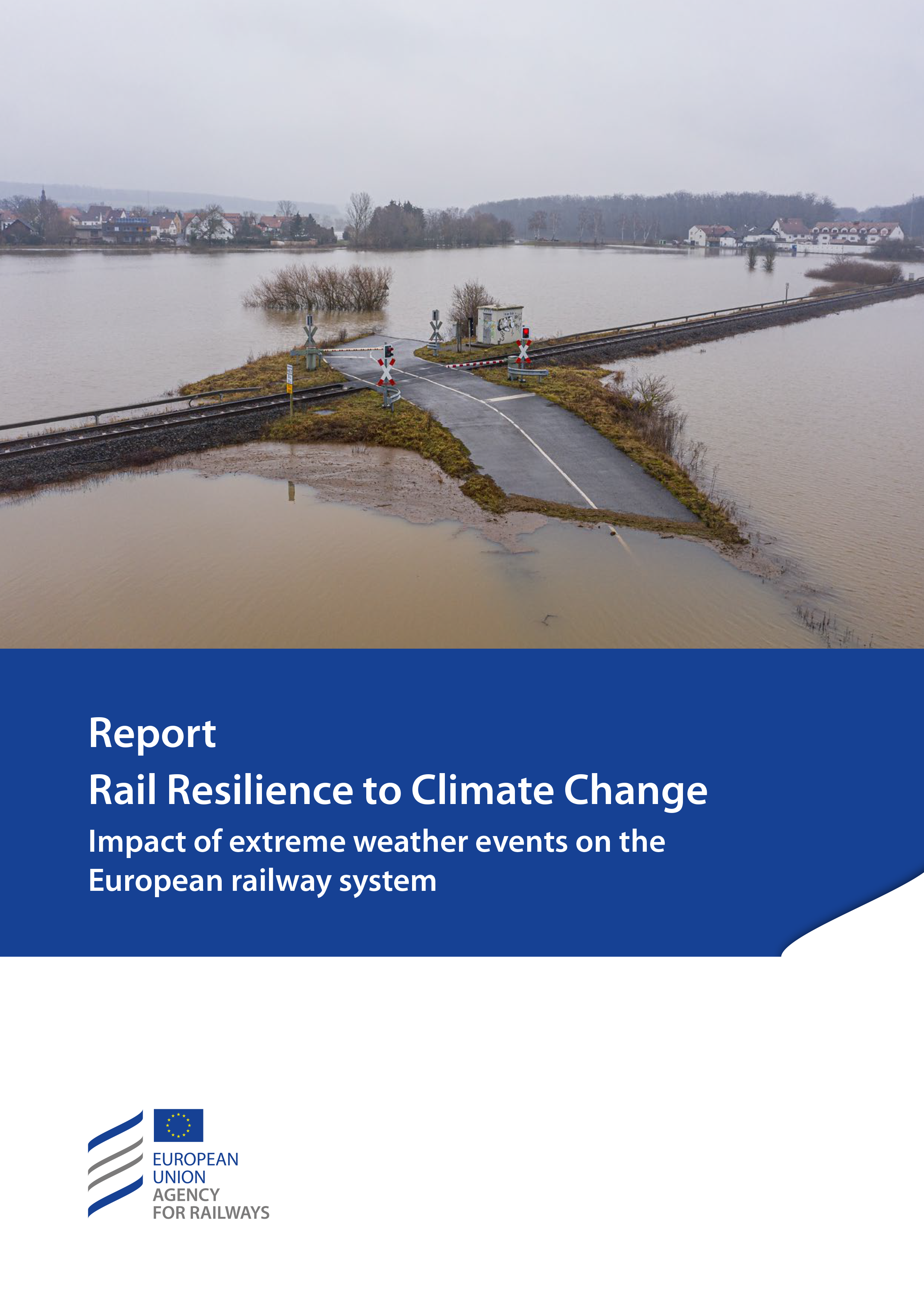
Following the publication of ERA’s report Rail Resilience to Climate Change, Agency experts Idriss Pagand and Eva Valeri were interviewed by the Baltic Sea–Adriatic Corridor newsletter to discuss the growing impact of climate change on Europe’s rail network and the measures needed to strengthen resilience.
The report, published in March 2026, presents the first EU-wide analysis of how extreme weather events affect railway infrastructure and operations. Based on data from 23 infrastructure managers representing nearly 80% of the EU rail network, it identifies flooding, landslides and windstorms as the most disruptive climate-related events, while also highlighting the increasing challenges posed by heatwaves and wildfires.
Reflecting on the rationale behind the study, Idriss Pagand explained: “With the Resilience to Climate Change Study, we aimed to consider a wider range of adverse weather events that, even if not resulting in accidents, still affect rail transport by causing delays, capacity issues, traffic disruptions, or infrastructure damage.”
Looking ahead, Eva Valeri underlined the importance of cooperation across the sector: “All infrastructure managers declared their interest in building a robust network to share best and worst practices. And this is also a key recommendation of our study.”
The interview also explores opportunities to strengthen the EU regulatory framework and improve coordination among infrastructure managers, national authorities and European stakeholders to better prepare the railway system for future climate challenges.
Read the full interview in the Baltic Sea–Adriatic Corridor newsletter